“What’s wrong with kids these days?” asks the AR of his friend Titmarsh. “Why can’t they be like we were, perfect in every way?”
When the AR was young, long ago, he goes on raggedly, cubs were polite. It is not that the AR has had a run-in with a young person. To the contrary he has had almost no contact with young persons. That is the problem. They see through him as if he weren’t there. They do not engage. They do not expect him to engage.
Titmarsh, of not few years himself, ponders. “The teenager was created in the 1950s, which to teenagers seemed wonderful but for the community in the long run was not so.”
The AR jabbers on. “Wherever we bounded about, my parents and I, before the invention of the teenager, my parents carefully and elaborately introduced me to adults. ‘AR,’ my parents would say, although they used another name for me then, names are so flexible, so variable, ‘AR, this is Mr. and Mrs. X. Mr. and Mrs. X bounded into the field near ours, they moved there from a field far away, as did we. Say hello to Mr. and Mrs. X.’ I would say, ‘Hello, Mr. and Mrs. X’ and I would smile and be fetchingly bashful, not because I was acting a part but because I was fetchingly bashful.”
“‘Hello, little AR,’ would answer Mr. and Mrs. X. ‘You are a handsome little buck.’ Or ‘We understand you are a marvelous leaper. You are very welcome to leap in our field.’ Or “you play the piano very well. You must play something on our piano.’ Or, “You are a good reader. When you come over to our burrow, we will give you carrot cake and some books of ours.’
Titmarsh nodded sympathetically. “Yes, it was like that for me. But after the invention of the teenager, that kind of interchange fell away, first between teenagers and people like Mr. and Mrs. X, later between all young people and people like Mr. and Mrs. X, because parents had been teenagers and they no longer introduced their children to other adults. The vertical line of interaction between ages broke. Only the horizontal remained. Young people now have lost much of their conversational and interactional skill. They bend solitary over cellphones. They live alone in their bedrooms with their laptops and iPads. They engage with the world digitally and little with the world close at hand, except their close friends. I can refer to you a post I saw on Facebook by a kindergarten teacher about that.”
And Titmarsh did. Here it is, as he read it to the AR:
This post is for parents, grandparents and caregivers of young children. I am begging you to please stop giving children smartphones and tablets to keep them occupied. I have been teaching Pre-Kindergarten children for eleven years and am very good at what I do, but it is getting more challenging every year because so many little ones are getting too much screen time. Through both formal and informal assessments as well as daily observation, I (along with many other educators) am seeing a rapid increase in children who cannot converse or effectively socialize with others, cannot look at and listen to someone who is speaking to them, cannot say their own names or communicate their needs clearly. Currently there are five children in my non-ESE classroom who have severe speech and language issues and several more who cannot sit still at a table or focus on anything that is not animated for more than a minute.
Do you remember when your child first smiled at you? They learned how to do that because you smiled at them. They learn how to make sounds and eventually say words by looking at and listening to the source of those sounds and words. Animated cartoon characters do not form words with their mouths…they are dubbed over the video. Children are left to try to form those words without a guide, hence the poor speech skills. (Yes, I understand there are legitimate pathological speech disorders, but I’m not talking about those kids.)
Do you remember sitting and talking with your family and friends as a young child? You were not distracted by a YouTube video, but were looking at them as they spoke to you and then spoke when they stopped. That is how children begin to learn conversation skills.
Do you remember being a young student looking and listening as your teacher read a favorite storybook and discussing the illustrations? Remember how that teacher read expressively and made the character sounds and you followed along? Too many kids today cannot focus on a basic story time lesson. They have gotten used to being entertained. Teachers have had to up our acting game just to hold their attention for three minutes. (And no, it’s not always ADD, so don’t go thinking hyperactivity meds are going to fix it.)
Do you remember playing with other children as a young child? How you shared toys and talked as you pretended to take care of baby dolls or build a block castle? Children are alone when they are playing on an app or watching videos. They may be next to you on the sofa, but they are alone in their head as they are consumed by whatever is happening on that device. When they come to school and have to work and play together, more and more children are either standing there with a “What do I do?” expression or completely taking over the center area with no regard for other children. They aren’t “bad” kids. They just haven’t interacted with others enough to learn they are not the only one.
Do you remember riding in the car and going to the grocery store as a kid? Remember how you recognized landmarks and knew when you were almost at your destination? You knew what was on the candy and chips aisle and what was in the dairy department. I regularly see kids in strollers and shopping carts holding smartphones, oblivious to anything happening around them. They won’t know the difference between the grocery and the hardware store because they are not experiencing any of it. They won’t recognize their own neighborhood while riding in a car.
Please put your phones down. Take the devices from your children for a while. Sit and look at them and talk with them rather than at them. They need to see you pronounce words. Narrate what you’re doing in the kitchen or yard so they learn some basic vocabulary. Talk about the things you see on your drive to school or in the grocery store. Ask them what they think about so they know you’re interested and their thoughts are valid. Play with them so they learn to share and play interactively.
You only get this time with your children once. Make the most of it. Please.
The AR listened carefully, for he was a good listener, had marvellous ears, and he appreciated his friend taking the time to share the post with him. In fact he realized there was almost nothing more important than the time he shared with Titmarsh and his DIK and his other friends in the fluffle.
“When I went on my travels around the world, in Europe, for example,” took up the AR, “I found the old ways still applied; in fact they were even stronger in those countries, which astonished me, for I had become inured to the ways of the post-teenager world. I would be formally introduced to young people of all ages and even more astounding, these young people would remain in the room when the adults engaged in conversation, and the adults would include the young people in the conversation, and the young people would expect to be included and would hold up their ends of the conversation very well: articulately, intelligently, without embarrassment. Not that there wasn’t abuse even there in European families, to be sure, there was. Nowhere does the human species rise completely above its nature, and Europe like the rest of the world has its history of horror.”
“You put your paw on it,” said Titmarsh. “It is adult behaviour that guides the young, in our species as in nearly all others.”
“By which you mean?”
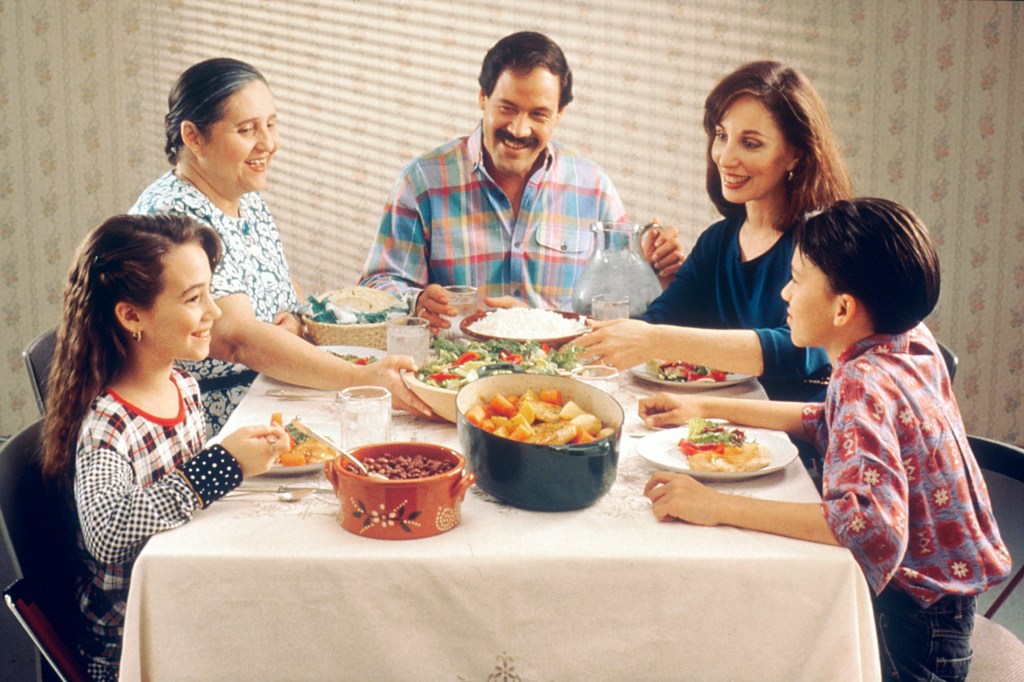
“By which I mean dining together, being together much of the day, at nights and weekends when they are young. Playing with them, engaging them in thoughtful conversation, introducing them to other adults and encouraging them to speak their minds with these adults and supporting your adult friends in engaging in thoughtful conversation too with your children. Encouraging them to engage with the concrete world around them, not just images and fantasies.”
“What can we do?”
Titmarsh closed his eyes. “We can model good behaviour with our adult friends, our spouses, all our family members, with people who serve us in restaurants and the marketplace. Ah, but I wonder if it is too late. Whether the time has passed, the technology is too strong, the cult of the teenager is too strong, and when our generation passes, all memory of that other time will be lost. On the other hand, very young children still scream with happiness in the company of parents and friends. Parents still engage with their young ones. And older ones see companions in school and at parties and they must interact with teachers and employers.”
The two friends were silent.
“Let us think about that,” said the AR.
 J. B. Thompson