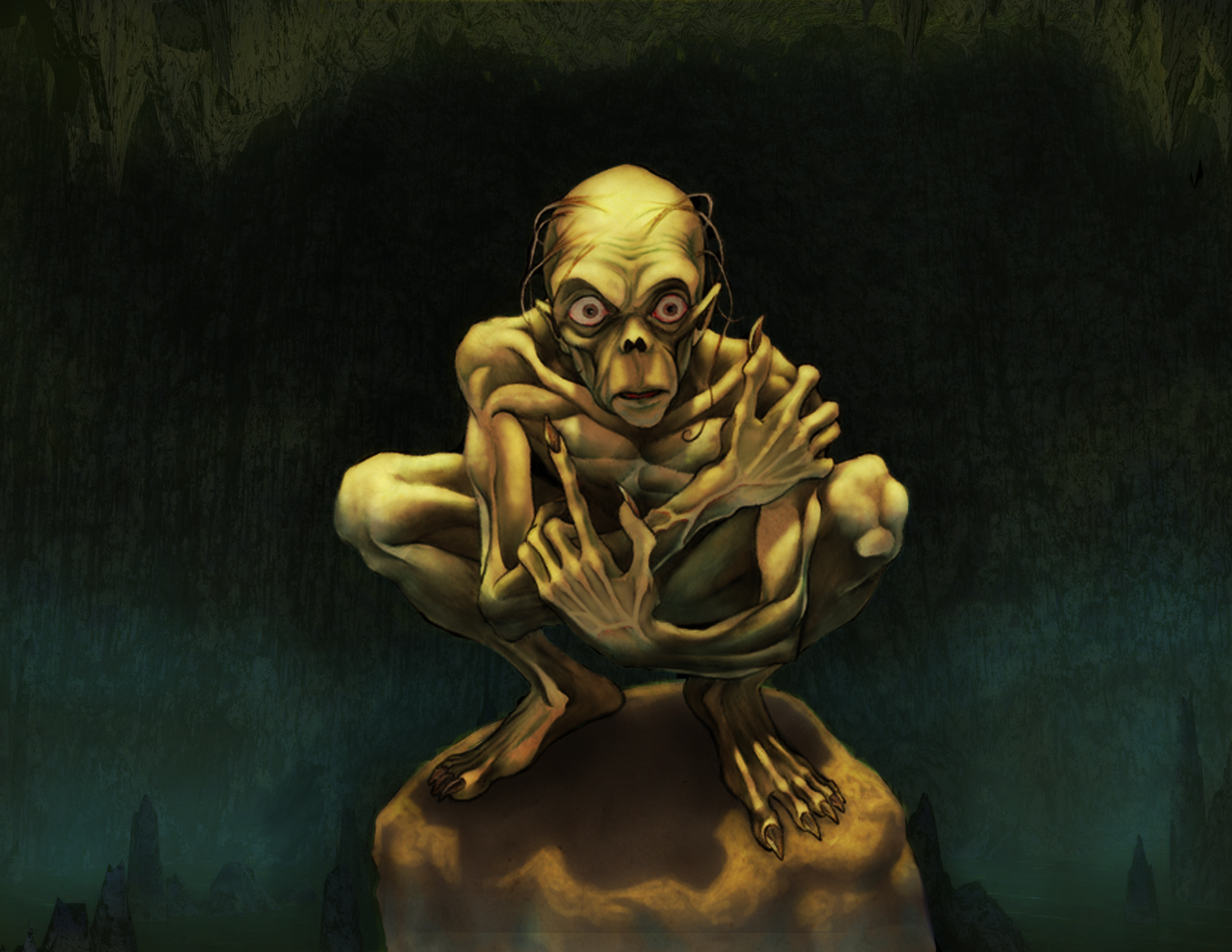
(Thank you to Daniel Govar of Deviant Art for this image.)
What is the mechanism of belief?
The Authorial Rabbit received a phone call from his reclusive friend Johannes de Silentio, a fearful citizen of the American project who at last count was living in a trailer in the desert in the southwest. The call came at 4 am, the witching hour for my friend, and not altogether a good time for the AR.
“I can’t believe it,” the voice on the line whispered. I thought I could detect a sandy desert night wind through the line — or maybe the line is bugged.
“Who is this? Oh. Yes. Can’t believe what, my friend?”
“He received more votes than last time. The second most votes ever in a national election.”
“The Preposterous Pump.” Will the Gollum ever go?
“Quarter million deaths from the virus and no plan and no end of infection and death in sight, no health care, anti-science, a religious masquerader, the economy in tatters, no promised infrastructure rejuvenation, personally corrupt and an enabler of corruption, a hater and bully, a racist and a misogynist and sexual assaulter, destroyer of the environment and global alliances, craven cuddler of dictators, giver of massive tax breaks for the rich and widener of the income disparity gap.” The voice was trailing off.
“Johannes? Are you still there?”
“Yes.”
“He’ll soon be gone.”
“He’ll never be gone. Even if he changes form, he’ll always be with us.”
And with me. I won’t be sleeping again after this call.
I direct Johannes to an article in The Atlantic by Dr. James Hamblin, columnist and lecturer at Yale School of Public Health. It explains why 70 million Americans chose to vote for a leader who brought them failure on every front. Really, the article is an analysis of the mechanism of belief.
The Doe I Know (DIK) has enlightened the AR on this subject before, wise as she is. It is all well and good to accept intellectually, using the reasoning power of the mind, that this or that assertion, premise, claim is correct or wrong. It is quite another to undertake the same exercise when under stress, when, for example, one’s health is at risk.
Enter the quack, the charlatan. The charlatan knows that a person’s rational mind, her reason, weakens under stress. Charlatans have been aware of that forever. And they rush in to profit where fools tread, when the mind is weak. They build a bond with their suckers, their marks. They become best friends. They become their pastor, their husband, their financial advisor, the non-mainstream medical advisor, their neighbourly male babysitter. Their president, their senator. Their non-fake news provider. Their trusted radio host. The expert whose credentials turn out to be bogus. They profess to love them as no one has ever loved them before. They have the answers no one else has delivered, that others have withheld cruelly out of selfishness and greed. Out of craven political correctness. Such qualities they themselves would never be sullied by. Because they love them. They have the remedy.
Once the bond is established, facts no longer matter. It is the age of alternative truth. What matters is the relationship.
My poor friend Johannes lists his facts, as if they matter to charlatans or marks. To marks, only the relationship matters. The facts are enemies, they are outside the relationship.
The AR knew a rabbit who develop paranoid schizophrenia. He spoke to cabbages. He fled from trees. To engage him in conversation was to disrupt a bond he had formed with voices in his head beneath trembling ears. To offer to help was to invade, to become the enemy.
It does not take paranoid schizophrenia to weaken the reasoning power. If it did, many fewer cigarettes, cars, cosmetics and vacuum cleaners would be sold, no snake oil, no promises of wealth, health, acquisition of real estate in the Darian Gap, no certain triumph over enemies, no assurance of lebensraum, no sure removal of swarthy immigrants, no elimination of other people’s religions, no salvation from the burning fires of hell, no happy payment of more taxes than rich people’s for a brighter tomorrow, no marriages arranged online, no stock market sure things, no receipt of unexpected windfalls, inheritances or surprise gifts of cash from far-eastern or African potentates, no prestigious degrees from a real-estate university, no crime in the suburbs, no lies.
As Freud reminded us in Civilization and its Discontents, as he was readying himself to flee the Nazis, building a state on the assumption that people are progressing towards perfection will bring only catastrophe. A state — and indeed all human relations — must be built upon the assumption that the human species is imperfect, that its reasoning power is weak and unreliable. That it not only may delude itself about its absence of delusion but will do so evermore.
As Pogo said, “We have met the enemy and he is us.”
 J. B. Thompson