As David Brooks writes in his excellent historical analysis in the Atlantic, trust is the essential ingredient of a healthy society. Decaying and failed states can be measured by the trust the population has in its government, its institutions, and among each other.
The AR enjoys Mr. Brooks’ presence on the PBS evening news on Fridays — along with the impish Mark Shields and unfailingly gracefully noble Judy Woodruff — and his columns in the New York Times. He is articulate, sensible, compassionate, thoughtful, if perhaps conveying the impression at times of being a little naive as the world collapses around him, the collapse created and led by members of the political party he belongs to.
His Atlantic essay draws on a number of scholars, including Samuel P. Huntington, who described American history as subject to “moral convulsions” every 60 or 70 years, with the current state of chaos falling neatly into that timeline.
The AR forgives Mr. Brooks for tending to blame the hippie generation for the current dreadful calamity, that generation’s anti-authoritarianism, its everything-goes mentality, its tendency to thrust carrots into the barrels of guns.
The AR, on the other paw, believes that generation was a mostly positive force, objecting to war, greed, pollution, corruption and docile conformity, but that it carried within it a subculture of authoritarianism, the Ayn Rand school, for example, whom the hippies derided as they derided Richard Nixon.
The AR watched the rise of that authoritarian subculture around the world from the sixties onward, clearly in the USA, even as the hippies fretted about paving paradise and putting up a parking lot for the big yellow taxi. It was no accident but a sad fact that from Reagan onward, American leaders were mostly of the authoritarian subculture. They were not hirsute rabbity hippies.
Nonetheless, Mr. Brooks’ thesis that absence of trust signals disaster is accurate and his argument cogent.
Mr. Brooks, we think, would not dispute that there are two types of trust. The AR and the DIK, whose childhood began 1940s Vienna, recall one kind of trust, a kind of death wish — the trust of the disappointed, the rejected, the repudiated — in the ideology and person of the strong man who will give them the vicarious pleasure of crushing their enemies (who are legion) and exalting their poor selves and redeeming them from lives of desperation.
In the USA, it is the AR’s contention, this desperation has been fostered by the same strong-man cult in whom the desperate place their trust. It is the irony of the strong-man cult that it purports to represent freedom when what it most desires is conformity to the iron fist.
Rather than in the high-trust states of Europe where democracies are strong, incomes are reasonable, health care is universal, the elderly are protected by pensions, individuals trust each other and their collective community, in the USA the ideology of greed and the strong man persuade the weak their weakness is their strength. It is their strength to be docile, to be poor, to be bankrupted by illness, to see their towns destroyed, because if they had a reasonable income and protections like health care and if their towns were solvent, they would not have the motivation to claw their way up the bleak mountain to riches.
Just as most basketball players never reach the big leagues, so it is that most citizens, especially the historically disadvantaged like people of colour, never reach the candy mountain top of riches. Instead they subside into the valleys of despond and opioids.
Atlantic writer Ann Applebaum — ever the incisive, insightful chronicler of decaying and decayed states, that wisdom much of Europe (not all) has learned and not forgotten — alludes to what the AR has observed throughout the Preposterous Pump Period: the strong-man ideology in the form of the Mussolini factor: the chin, the downturned tight angry lips, the raised fists, the chicanery and corruption, the bullying, the womanizing, the desire to launch an imperial dynasty of half-wits, all the choreographed imagery, memes and words.
And now its collapse, the steroidal retreat to the White House mountains, spouting madness and fear, the hint of the grotesque spectacle of Milan in 1946.
To the end, Italian fascists revered their leader. To the end and beyond, Nazis worshiped Hitler. They emerge from the sewers today. Theirs was, is, an indefatigable blind trust. Fortunately, perhaps, the current incumbent is not a Machiavelli, not capable negotiating in his dark tunnels, not consistent in his ideological terror, not gifted with oratory above the average eight year old’s. How that malign incompetence will play out in this year of calamity remains to be seen.
Healthy trust is something else. For one thing, it is not all believing, it is not uncritical, it is not an abandonment of reason, of science. It is not a scapegoating, a searching for enemies. It is not a refusal to admit failure and personal imperfection. It is the trust among friends.
Friends recognize they are all imperfect. We are all imperfect. All people sharing the struggle of life. Friends are not afraid to share uncomfortable truths with each other compassionately. They step up to help each other in need.
The best kind of trust extends that friendship beyond the tribe to all human beings, all rabbits, all living beings.
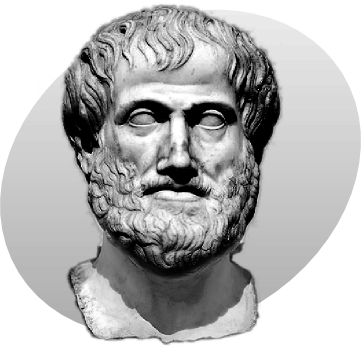
What is a friend? A single soul dwelling in two bodies. So said Aristotle.
Now think a single soul dwelling in all bodies.
 J. B. Thompson